
Single Port Gallbladder Surgery
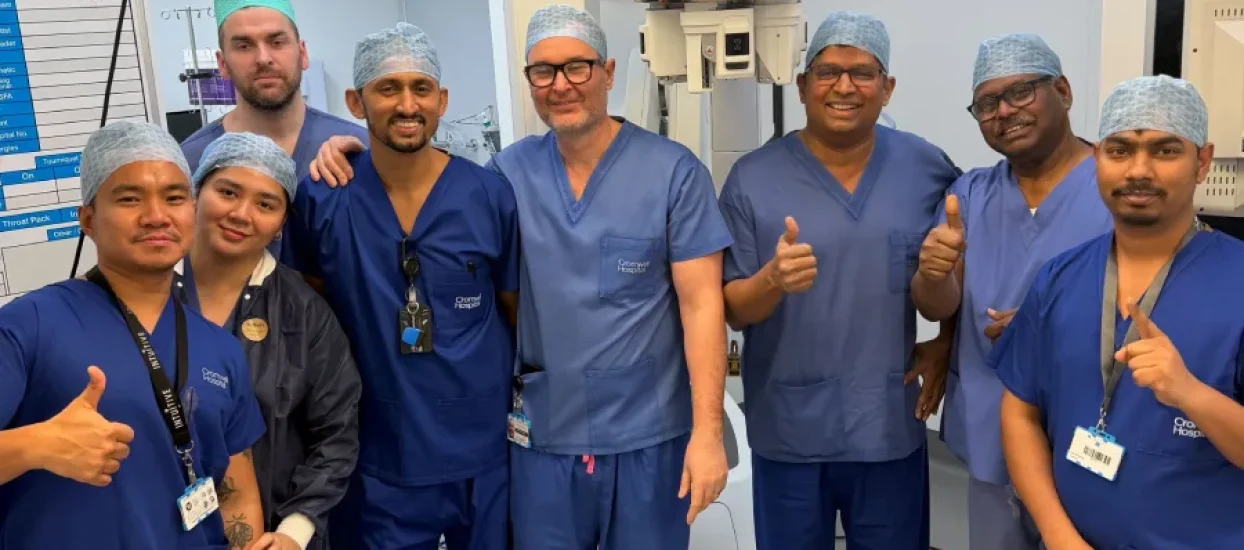
Mr Sasindran Ramar, a distinguished robotic surgeon in London, specialises in advanced minimally invasive procedures, including Single Port Gallbladder Surgery. This innovative technique offers patients a less invasive alternative to traditional gallbladder removal, resulting in reduced scarring, quicker recovery times, and6bladder conditions can benefit from Mr Ramar’s expertise and commitment to patient-cen6stores and concentrates bile, a digestive fluid produced by the liver. Conditions affecting the gallbladder, often caused by gallstones, can lead to significant pain and complications. Common gallbladder diseases include:
- Cholelithiasis
The presence of gallstones, which are hardened deposits of digestive fluid.
- Biliary Colic
Severe pain caused by gallstones temporarily blocking the bile ducts.
- Acute Cholecystitis
Sudden inflammation of the gallbladder, usually due to a gallstone blocking the cystic duct.
- Chronic Cholecystitis
Long-term inflammation of the gallbladder, often resulting from repeated bouts of acute cholecystitis.
When these conditions cause persistent symptoms or lead to complications, surgical removal of the gallbladder, known as a cholecystectomy, may be recommended.
The Evolution of Cholecystectomy: From Open to Single Port
Historically, gallbladder removal was performed through open surgery, requiring a large abdominal incision. The advent of laparoscopic cholecystectomy revolutionised the procedure, allowing surgeons to remove the gallbladder through several small incisions.
Single Port Gallbladder Surgery, also known as Single Incision Laparoscopic Cholecystectomy (SILC) or Single Site Robotic Cholecystectomy (SSRC), represents the next evolution in minimally invasive surgery. This technique involves a single, small incision, typically made within the navel, to access and remove the gallbladder.
Mr Sasindran Ramar's Expertise in Robotic Single Port Gallbladder Surgery
Mr Sasindran Ramar is at the forefront of robotic surgery, utilising the advanced da Vinci Si Surgical System for Single Port Gallbladder Surgery. This robotic platform enhances precision and control, overcoming some of the technical challenges associated with manual single-incision laparoscopic techniques. The flexible instruments and magnified 3D vision provided by the robotic system allow Mr Ramar to perform complex dissections with exceptional accuracy, ensuring optimal patient outcomes.
Benefits of Robotic Single Port Approach
Patients undergoing robotic single port gallbladder surgery with Mr Ramar can expect several significant advantages:
- Minimised Scarring
The single incision, often concealed within the navel, results in a virtually scarless outcome, offering superior cosmetic results .
- Reduced Post-operative Pain
The smaller incision and less tissue trauma contribute to significantly less pain after surgery, often reducing the need for strong pain medication .
- Faster Recovery
Patients typically experience a quicker return to normal activities and a shorter hospital stay, with many discharged on the same day of surgery.
- Lower Risk of Complications
Compared to traditional open surgery, the minimally invasive nature of the single port approach can lead to a reduced risk of certain complications .
- Enhanced Surgical Precision
The robotic system provides Mr Ramar with unparalleled dexterity and visualisation, leading to a highly precise and safe
The Surgical Procedure
Single Port Gallbladder Surgery is performed under general anaesthesia. Mr Ramar makes a small incision, usually 1.5 to 2 cm, within the umbilicus. Through this single incision, a specialised port is inserted, allowing the introduction of a camera and surgical instruments. Carbon dioxide gas is used to inflate the abdomen, creating a working space for the surgeon. Mr Ramar then carefully dissects and removes the gallbladder using the robotic system’s advanced instrumentation. Once the gallbladder is removed, the incision is closed, often with dissolvable sutures.
Patient Selection and Preparation
Mr Ramar carefully assesses each patient to determine their suitability for Single Port Gallbladder Surgery. Indications for the procedure are similar to those for conventional cholecystectomy, including symptomatic gallstones, acute or chronic cholecystitis, and biliary colic. While most patients are candidates, certain factors such as severe obesity, extensive previous abdominal surgery, or significant inflammation may be considered relative contraindications, particularly during the learning curve of the technique.
Prior to surgery, patients will undergo a thorough medical evaluation, including blood tests and imaging studies, to ensure they are in optimal health for the procedure. Mr Ramar and his team will provide detailed instructions regarding pre-operative preparation, including dietary guidelines and medication adjustments.
Recovery and Post-operative Care
Following Single Port Gallbladder Surgery, patients are closely monitored in the recovery area. Due to the minimally invasive nature of the procedure, most individuals experience a relatively swift recovery. Patients are encouraged to mobilise early, and pain medication will be provided as needed. Discharge typically occurs on the same day or the day after surgery. Mr Ramar’s team will provide comprehensive post-operative instructions, including wound care, dietary recommendations, and activity restrictions, to ensure a smooth and uneventful recovery.
Frequently Asked Questions
What is the main difference between single port and traditional laparoscopic gallbladder surgery?
The primary difference lies in the number of incisions. Traditional laparoscopic surgery uses several small incisions, while single port surgery uses only one small incision, typically hidden in the navel, leading to improved cosmetic outcomes and potentially less pain.
Is robotic assistance necessary for single port gallbladder surgery?
While single port surgery can be performed manually, robotic assistance, as utilised by Mr Sasindran Ramar, offers enhanced precision, control, and 3D visualisation, which can overcome some technical challenges and contribute to better outcomes.
How long does the recovery take after single port gallbladder surgery?
Recovery is generally faster than traditional methods. Many patients are discharged on the same day and can return to light activities within a few days, with a full return to normal activities typically within one to two weeks.
Are there any risks associated with single port gallbladder surgery?
As with any surgical procedure, there are potential risks, including bleeding, infection, or injury to surrounding organs. However, the minimally invasive nature of single port surgery often reduces these risks compared to open surgery. Mr Ramar will discuss all potential risks and benefits during your consultation.
Will I have a visible scar?
The single incision is usually made within the navel, making the resulting scar virtually invisible once healed, offering excellent cosmetic results .
References
1.Bhandarkar, D., Mittal, G., Shah, R., Katara, A., & Udwadia, T. E. (2011). Single-incision laparoscopic cholecystectomy: How I do it? Journal of Minimal Access Surgery, 7(1), 17–23. https://pmc.ncbi.nlm.nih.gov/articles/PMC3002000/
2.Morel, P., Pugin, F., Bucher, P., Buchs, N. C., & Hagen, M. E. (2011). Robotic single-incision laparoscopic cholecystectomy. Journal of Robotic Surgery, 6(3), 273–274. https://pmc.ncbi.nlm.nih.gov/articles/PMC3429781/
3.Cleveland Clinic. (2025, June 9). Single-Port Surgery: Purpose, Procedure, Risks & Recovery. https://my.clevelandclinic.org/health/treatments/17476-single-port-surgery
4.Asad, U., & Singh, A. (2025). Laparoscopic Cholecystectomy. In StatPearls. StatPearls Publishing. https://www.ncbi.nlm.nih.gov/books/NBK448145/