
Share this :
Modern surgery continues to evolve with a strong focus on reducing trauma, shortening recovery, and improving how patients feel after their procedure. Single-Port Robotic Surgery represents one of the most significant advances in this direction, particularly for gallbladder removal and inguinal hernia repair. By allowing surgeons to operate through one small, discreet incision, this approach combines surgical precision with faster recovery and improved cosmetic outcomes.
This technique is led by highly experienced specialists such as Mr. Sasindran Ramar, a nationally recognised robotic surgeon with over 30 years of experience. His extensive background in minimally invasive and robotic procedures ensures that advanced technology is used safely, effectively, and with patient comfort firmly in mind.
A New Standard in Minimally Invasive Surgery
Traditional open surgery requires a larger incision, which can result in more post-operative pain, longer hospital stays, and visible scarring. Even standard laparoscopic or robotic surgery typically involves multiple small cuts across the abdomen. Single-port robotic techniques take this a step further by enabling the entire operation to be performed through one carefully placed incision, most commonly at or near the belly button.
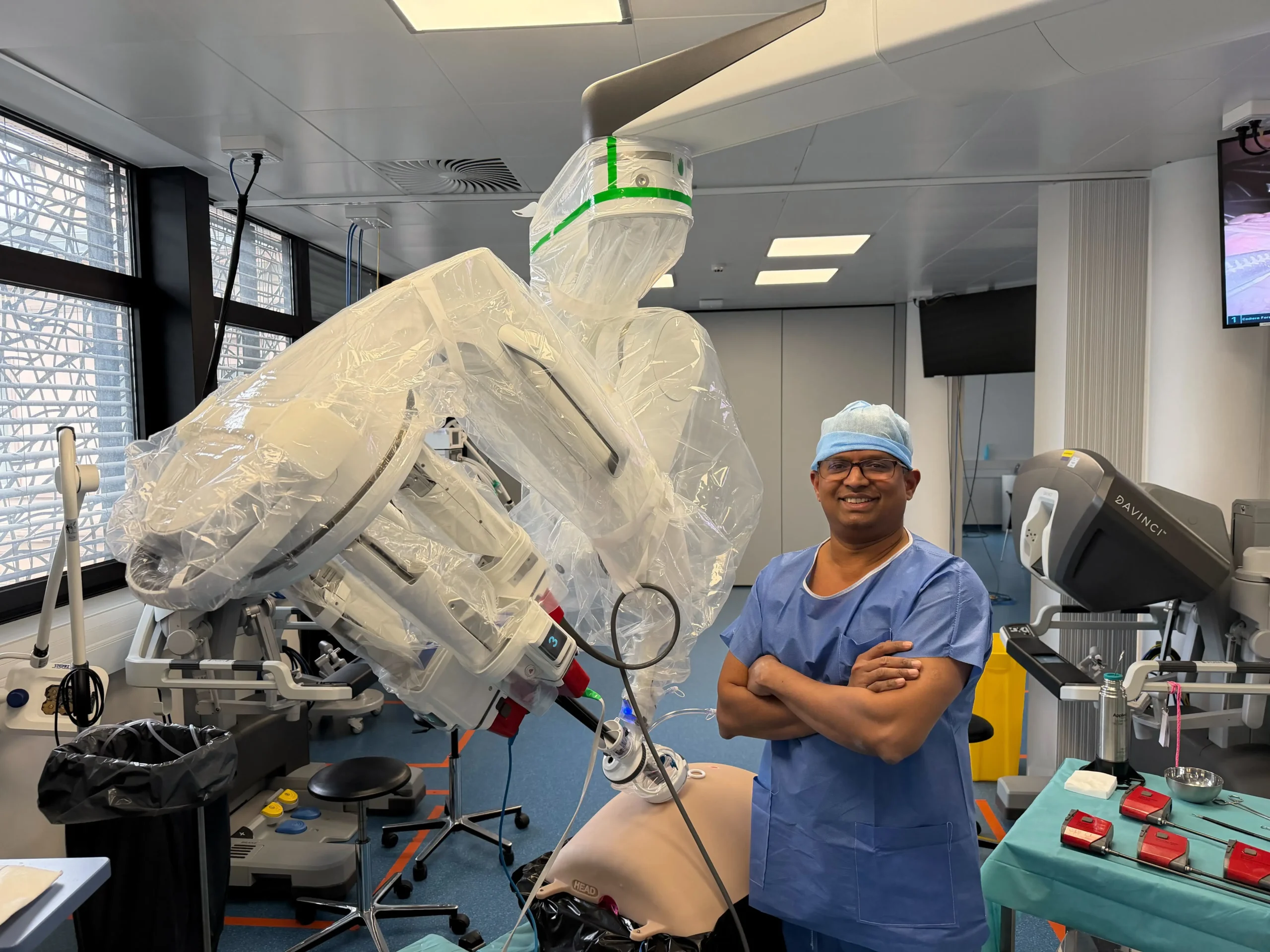
The procedure uses the Da Vinci SP platform, a system designed specifically for single-entry access. Through one port, the surgeon introduces a high-definition 3D camera and several wristed instruments. These tools are controlled from a console, allowing movements that are more refined than the human hand, while also filtering out natural tremor.
The result is a procedure that is not only precise but also gentle on the body.
Expertise Matters: The Role of the Surgeon
Advanced technology is only as effective as the surgeon using it. Mr. Sasindran Ramar brings more than three decades of surgical experience, including complex minimally invasive and robotic procedures. His nationally recognised expertise ensures careful patient selection, meticulous surgical technique, and a strong focus on safety.
For gallbladder and inguinal hernia surgery, this experience is particularly important. These procedures involve delicate structures such as bile ducts, blood vessels, and nerves, where accuracy is critical. Robotic systems enhance vision and dexterity, but it is the surgeon’s judgement and skill that ultimately determine the outcome.
Gallbladder Surgery Through a Single Access Point
Gallbladder removal, also known as cholecystectomy, is commonly performed for gallstones, inflammation, and recurring abdominal pain related to bile flow. Using robotic single-port techniques, the surgeon can access the gallbladder through one small incision hidden within the natural contours of the navel.
During the procedure, the camera provides a magnified 3D view of the gallbladder and surrounding anatomy. This allows the surgeon to clearly identify and protect vital structures while safely removing the gallbladder through the same incision used for access.
Benefits for Patients
- Reduced post-operative discomfort
- Minimal disruption to muscle and tissue
- Shorter hospital stay, often with same-day discharge
- A scar that is small and usually difficult to see
Many patients are able to return to light daily activities sooner than with traditional approaches, depending on their overall health and recovery progress.
Inguinal Hernia Repair Without a Groin Incision
An inguinal hernia occurs when tissue pushes through a weak area of the lower abdominal wall, often causing a visible bulge and discomfort in the groin. Conventional open surgery involves a direct incision in this area, while laparoscopic repairs use multiple abdominal cuts.
With a single-port robotic approach, the surgeon accesses the hernia from within the abdomen through one incision near the belly button. The hernia is reduced, and a mesh is typically placed internally to reinforce the weakened area. Importantly, this avoids an incision directly over the groin.
Why This Approach Appeals to Patients
- Less discomfort when walking, bending, or sitting
- No visible groin scar
- Precise mesh placement for long-term strength
- Suitable for certain complex or recurrent hernias
Patients often find this method more comfortable in the early recovery period, particularly when resuming everyday movement.
What Recovery Commonly Looks Like
Recovery varies between individuals, but many patients report a smoother experience compared with more invasive techniques.
Immediately After Surgery
Most patients spend a short time in the recovery area before returning home the same day or after one night in hospital. Pain is usually manageable with mild medication, as advised by the surgical team.
The First Few Days
Only one small dressing is required. Gentle walking is encouraged to promote circulation, and normal activities are gradually resumed. After gallbladder surgery, patients often return to a light diet quickly, adjusting as tolerated.
Longer-Term Healing
Desk-based work may be possible within days to a couple of weeks. Heavier lifting and strenuous exercise are usually restricted for several weeks, particularly after hernia repair, to allow the internal repair to heal fully. Over time, the single incision typically fades and becomes less noticeable.
Cosmetic Confidence After Surgery
For many patients, appearance matters alongside medical results. Single-port robotic techniques are designed with this in mind. By limiting surgery to one discreet incision, usually hidden in the belly button, there are no additional marks across the abdomen or groin.
This can be particularly reassuring for younger patients, those who lead active lifestyles, or anyone who prefers to avoid visible reminders of surgery. While all procedures leave some form of scar, this approach aims to keep it as subtle as possible.
Is This Approach Suitable for Everyone?
Not every patient or condition is appropriate for a single-port robotic technique. Factors such as previous abdominal operations, the size and complexity of a hernia, body weight, and overall health must all be considered. A detailed consultation allows the surgeon to recommend the safest and most effective option for each individual.
With extensive experience, Mr. Sasindran Ramar carefully assesses whether this approach is suitable or whether an alternative technique would offer better outcomes.
Bringing Precision, Comfort, and Appearance Together
By combining advanced technology with expert surgical judgement, Single-Port Robotic Surgery offers a modern solution for gallbladder removal and inguinal hernia repair. It prioritises accuracy during the operation, comfort during recovery, and confidence in appearance afterwards.
For patients seeking effective treatment with minimal disruption to daily life, discussing single-port robotic options with an experienced surgeon can be an important step towards making an informed and confident decision.
Frequently Asked Questions (FAQs)
What is single-port robotic surgery?
Single-port robotic surgery allows complex procedures like gallbladder removal or hernia repair to be performed through one small incision, often hidden within the belly button, using a robotic system controlled by the surgeon.
Who is suitable for this type of surgery?
Patients with gallbladder disease or certain inguinal hernias may be suitable, but suitability depends on factors like previous abdominal surgery, hernia size, and overall health. A consultation with an experienced surgeon is essential.
How long does recovery take?
Many patients return to light activities within a few days, while heavier lifting and strenuous exercise may be restricted for several weeks. Hospital stay is often same-day or overnight.
Are there any visible scars?
The approach aims to minimise scarring. Typically, there is only one small incision at the belly button, and for hernia repair, there is no incision in the groin itself.
Who performs these procedures?
Surgeons with specialised training in robotic techniques perform these procedures. For example, Mr. Sasindran Ramar, with over 30 years of experience, is nationally recognised for his expertise in robotic gallbladder and hernia surgery.